Disclosure: This post contains affiliate links. If you buy through them, True North Winter may earn a commission at no extra cost to you. As an Amazon Associate I earn from qualifying purchases. Full disclosure
By The True North Winter team · Research-based roundup · Last updated October 2026
Few things say “Canadian winter” like that slow, groaning crank on a -30 °C morning, or the dead silence that follows it. Cold weather is hard on both halves of the starting equation: engine oil thickens, making the engine harder to turn over, while the battery delivers less power exactly when you need more.
The good news is that a few relatively inexpensive tools can make cold starts far more reliable. This guide covers two categories: heaters that keep your engine and battery warm before you start, and boosters and chargers that get you going (or keep your battery healthy) when things go wrong.
This is a research-based roundup. We haven’t tested these products ourselves; we compared manufacturer specs, Canadian retailer listings and guidance from sources like Natural Resources Canada to pick products that are sold in Canada today.
Quick picks
| Pick | Category | Best for | Approx. price (CAD)* |
|---|---|---|---|
| Zerostart engine block heater (vehicle-specific) | Engine heater | Most cars and trucks without a factory heater | Varies by vehicle; check fitment |
| Zerostart tank-style circulation heater | Engine heater | Vehicles where a core-plug heater isn’t practical | $90–$160 |
| Zerostart 2800063 battery warmer blanket | Battery heater | Keeping the battery itself warm overnight | $45–$65 |
| NOCO Boost Plus GB40 | Lithium jump starter | Best all-round booster for cars and small SUVs | $130–$160 |
| MotoMaster Eliminator XB15 | Lithium jump starter | Bigger engines; Canadian Tire shoppers | $140–$180 |
| NOCO GENIUS5 | Smart charger/maintainer | Keeping batteries topped up through winter | $95–$110 |
*Prices change often and vary by retailer and province. Check the current price before buying.
What to look for in Canada
Block heaters: when and how to use them
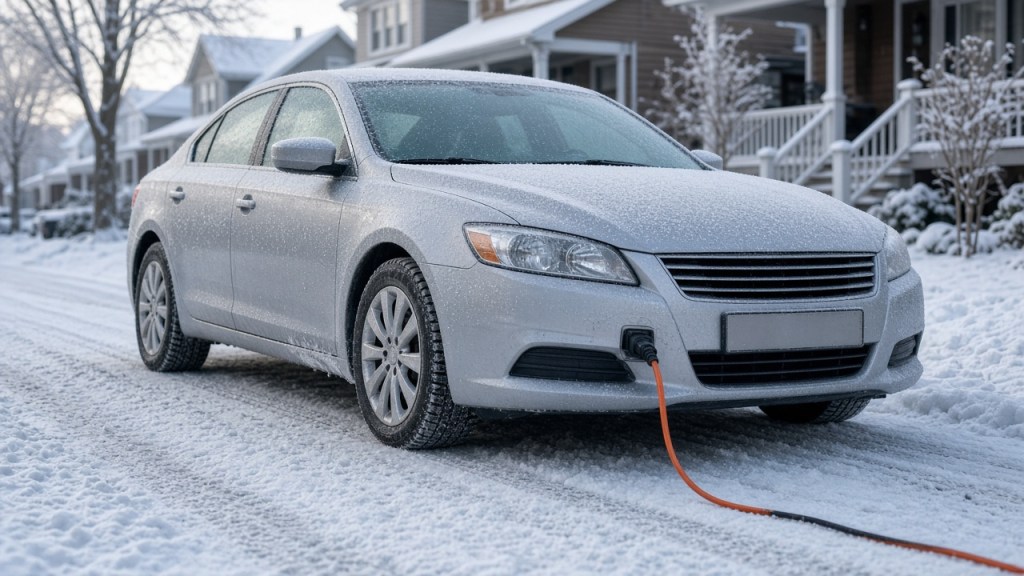
Natural Resources Canada recommends using an outdoor-rated timer so your block heater turns on about two hours before you plan to drive. That’s usually enough to warm the engine, and it avoids paying to run the heater all night. Many Canadian drivers start plugging in around -15 °C, but check your owner’s manual. Some newer vehicles and synthetic oils are rated for colder starts.
Key things to check:
- Fitment. Block heaters are vehicle-specific. Many cars sold in Canada come with one from the factory, so look for a plug tucked behind the grille before you buy. If you need one, use your year, make, model and engine size to find the correct part. Installation often involves draining coolant, so many people have a mechanic do it.
- Type. Common types include core-plug (freeze-plug), cartridge, and tank/circulation heaters that splice into a coolant hose.
- Cord condition. A frayed or cracked cord is a safety hazard. Replace it, and use a proper outdoor-rated, heavy-gauge extension cord.
Battery warmers
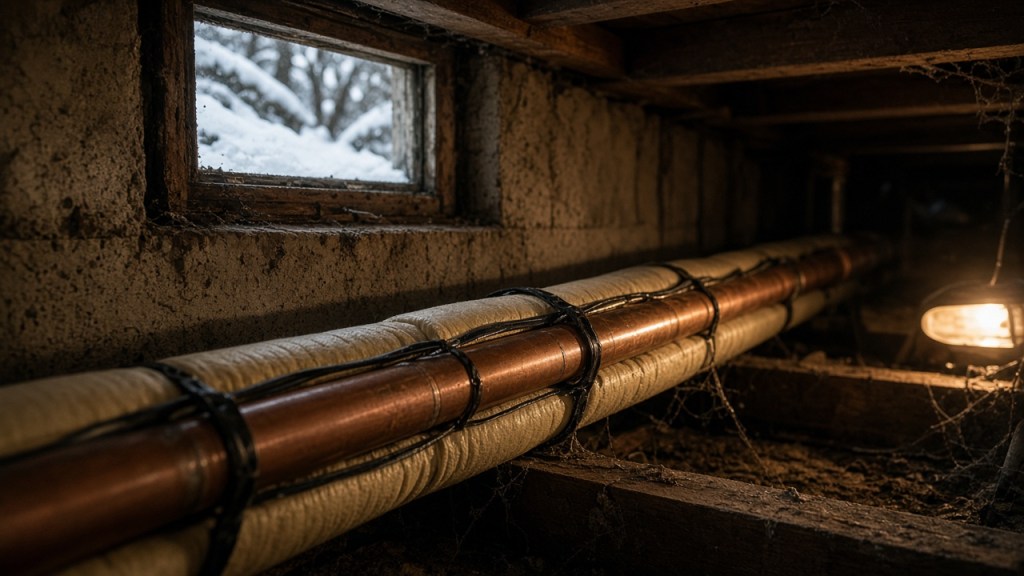
A battery loses a big chunk of its available power in deep cold. A battery blanket wraps around the battery and plugs in alongside your block heater. Check which battery group sizes it fits.
Jump starters (boosters)
- Engine size rating. Manufacturers rate boosters by the gas and diesel engine sizes they can start (e.g., “up to 6.0 L gas”). Pick one rated above your engine size; cold weather makes starting harder.
- Safety features. Look for spark-proof clamps and reverse-polarity protection.
- Cold storage. Lithium packs don’t love extreme cold. Keeping the booster in the cabin or bringing it inside overnight helps it hold its charge, and check the manufacturer’s operating-temperature range.
- Recharge habits. A booster is useless if it’s dead. Top it up monthly through winter.
Battery chargers and maintainers
A smart charger with temperature compensation adjusts charging for cold conditions. It’s ideal for vehicles that sit (a summer car, a second vehicle, a snowmobile or an RV battery).
The best cold-start products in Canada
1. Zerostart engine block heater (vehicle-specific): Best first line of defence
Why it made our list: Zerostart, made by Phillips & Temro, is one of the most common block heater brands in Canada, and Canadian Tire stocks Zerostart heaters and replacement cords. Zerostart makes threaded, cartridge, plate and freeze-plug styles to suit different engines.
What to know:
- You must match the heater to your exact engine. Use the retailer’s vehicle lookup or ask the parts counter.
- Installation usually requires draining and refilling coolant; professional installation is common.
- Pair it with an outdoor timer to save electricity.
Approx. price: varies widely by vehicle and heater type. Check your fitment at the retailer (prices change).
2. Zerostart tank-style circulation engine heater: Best when a core-plug heater won’t fit
Why it made our list: Tank (circulation) heaters splice into a coolant hose and circulate warmed coolant through the engine. They’re a common alternative when a core-plug heater isn’t available or practical for your engine. Canadian Tire and PartSource list Zerostart tank-circulation heaters.
What to know:
- Wattage and hose diameter vary by model. Confirm both before buying.
- Mounting location matters; follow the installation instructions or have a mechanic install it.
Approx. price: $90–$160 CAD depending on model and retailer (prices change).
3. Zerostart 2800063 battery warmer blanket: Best battery heater
Why it made our list: It’s a simple, CSA-approved way to keep your battery warmer overnight, and it’s listed at both Canadian Tire and Amazon.ca.
Key specs (per manufacturer/Amazon.ca listing):
- 120 V, 80 W, about 91 cm (36 in.) long
- CSA approved
- Fits a long list of common group sizes, including 24, 25, 27, 31, 34, 35 and others. Check your battery’s group size against the listing
Good fit if: you park outside in the Prairies, northern Ontario, Quebec or the North, and you already plug in a block heater.
Approx. price: $45–$65 CAD (prices change).
4. NOCO Boost Plus GB40: Best all-round jump starter
Why it made our list: The GB40 is one of the best-known compact lithium boosters and is widely available on Amazon.ca.
Key specs (per NOCO/Amazon.ca listing):
- 1,000 A peak, 12 V lithium jump starter
- Rated for gas engines up to 6.0 L and diesel engines up to 3.0 L
- Spark-proof, reverse-polarity protection
- Doubles as a USB power bank
Good fit if: you drive a car, crossover or small SUV and want a booster that fits in the glovebox or console.
Consider instead if: you drive a large V8 truck or a bigger diesel. Look at a higher-rated model.
Approx. price: $130–$160 CAD on Amazon.ca (prices change).
5. MotoMaster Eliminator XB15: Best for bigger engines (Canadian Tire pick)
Why it made our list: MotoMaster is Canadian Tire’s in-house automotive brand, and the Eliminator line is easy to find in stores coast to coast. That’s handy if you’d rather buy in person or need a quick exchange.
Key specs (per listings):
- 1,500 A peak, 12 V lithium booster
- Rated for gas engines up to about 6.5 L and diesel up to about 4.0 L
- USB-C and USB-A charging ports, built-in flashlight
Good fit if: you drive a pickup or larger SUV, or you want to collect Triangle Rewards on the purchase.
Need more? Canadian Tire also lists the larger Eliminator XB30 (3,000 A) for heavier-duty use.
Approx. price: $140–$180 CAD; it has been seen at about $140 on sale versus about $175 regular (prices change).
6. NOCO GENIUS5: Best battery charger and maintainer
Why it made our list: Prevention beats a roadside boost. The GENIUS5 is a popular, compact smart charger sold on Amazon.ca and by Canadian battery retailers.
Key specs (per NOCO/Amazon.ca listing):
- 5 A, 6 V/12 V smart charger, trickle charger and maintainer
- Temperature compensation and a desulfation mode
- Works with lead-acid (wet, gel, AGM) and lithium (LiFePO4) batteries
Good fit if: you have a vehicle that sits for days at a time, short commutes that never fully recharge the battery, or seasonal toys like a snowmobile or ATV.
Approx. price: $95–$110 CAD (prices change).
Cold-start FAQ
At what temperature should I plug in my block heater?
There’s no single national rule. Natural Resources Canada recommends using a timer set for about two hours before you drive, and many drivers start plugging in around -15 °C. Check your owner’s manual, especially if your vehicle uses synthetic oil.
Do I need a block heater if my car is new?
Many vehicles sold in Canada include a factory block heater. Look for a plug near the front grille. Even new vehicles benefit in very cold regions, because a warmer engine starts more easily and warms up faster.
Can I leave my block heater plugged in all night?
You can, but it uses electricity for hours longer than necessary. An outdoor-rated timer that switches on about two hours before departure is the more economical option.
Will a lithium jump starter work at -30 °C?
Lithium packs lose capacity in extreme cold, and each model has a rated operating range. Store your booster inside your home overnight or keep it charged and in the cabin, and check the manufacturer’s temperature specs.
Is a battery charger the same as a jump starter?
No. A jump starter delivers a quick burst to start the engine now. A charger/maintainer slowly restores and maintains the battery over hours. Many Canadians benefit from having both.
The bottom line
The cheapest cold-start insurance is a working block heater on a timer. Add a Zerostart battery blanket if you park outside in a truly cold region. Then keep a charged NOCO Boost Plus GB40 (or MotoMaster Eliminator XB15 for bigger engines) in the vehicle for the morning everything else fails. If your car sits a lot, a NOCO GENIUS5 maintainer can stop many dead-battery problems before they start.
Check fitment, check current prices, and plug in before the deep freeze hits.


Leave a Reply